Showing posts with label economic melt-down. Show all posts

Thursday, February 11, 2010

Need a Churchill for our age?

Mike Larson of the Money and Markets newsletter wrote what I thought was a perceptive article about the United States' financial difficulties . . . not to mention the financial difficulties of the world at large.

The publisher gave permission to reprint this article as long as I include the following paragraph:
This investment news is brought to you by Money and Markets. Money and Markets is a free daily investment newsletter from Martin D. Weiss and Weiss Research analysts offering the latest investing news and financial insights for the stock market, including tips and advice on investing in gold, energy and oil. Dr. Weiss is a leader in the fields of investing, interest rates, financial safety and economic forecasting. To view archives or subscribe, visit http://www.moneyandmarkets.com.
--Let me say: I include that paragraph with joy. I have found Weiss and his associates insightful and, though clearly hopeful of acquiring business, far less . . . ummm . . . hysterical and manipulative . . . than some of their competitors.

Mike begins his article with a brief description of a recent trip he took to Europe in late January. He said probably the biggest highlight of the trip for him was the Churchill Museum and Cabinet War Rooms in London. They got him thinking about what a statesman Churchill was. . . .
Tucked away in the basement of the U.K. Treasury, the [museum] allows you to experience what it was like during the Nazi "Blitz" of World War II.

Beginning in the mid-1940s and continuing for months on end, successive waves of Nazi fighters and bombers began pummeling the British coastline. They struck the British airfields next before moving on to British towns and cities, including London.

You can eyeball the cramped, low-ceilinged meeting rooms where Churchill and staff pondered the course of the war amid thick, acrid clouds of cigar and cigarette smoke.

You get to see the Spartan sleeping quarters they made do with, and the musty old maps of Europe, the U.K., and the North Atlantic they used to track troop movements and convoys.

Churchill didn't pull any punches when he gave his regular radio speeches.
You can listen to the speeches Churchill delivered even as the bombs fell — never lying to the British public about the dire straits they were in ... but also never failing to inspire.

Perhaps most disturbing of all, you can view the yellowed casualty lists they used to track the dead and wounded from the Nazi bombardment. More than 20,000 ultimately perished in London alone.

Then and Now . . .

Not much has changed in the nearly 64 years since the facility was mothballed. But I still couldn't help but be inspired from my visit. After all, Londoners persevered during the Blitz. Churchill didn't back down. The Brits "kept calm and carried on." And ultimately, the Allies won the great war.

Why do I bring this all up? Because I feel like we've lost that ability for politicians to level with us, especially when it comes to financial matters. There's no Churchill on the airwaves willing to tell it like it is, and asking for personal sacrifice.

Instead, politicians keep promising the sun, the moon, and the stars — even though we simply can't afford it. We're SPENDING like there's a massive world war going on even though there isn't! And no one seems to want to change this course we're on.

You can already see "budget bombs" scoring direct hits in Athens. And they're landing on the outskirts of Lisbon. If we don't do something about it soon, one of 'em is going to land squarely in Washington — with bond prices plunging and interest rates soaring!

CBO Warns of Never-Ending Budget Woes ...

Just a few short days ago, the Congressional Budget Office (CBO) became the first official D.C. source to open its bomb bay doors and let loose on all of us. The CBO's projections: Instead of falling substantially from $1.4 trillion in 2009 (9.9 percent of GDP), the 2010 deficit would essentially hold steady at $1.35 trillion (9.2 percent of GDP).

The massive 2010 deficit would be followed by another $980 billion deficit in 2011 ... $650 billion in 2012 ... and $539 billion in 2013. Total red ink through 2020: $7,400,000,000,000!

As stunning as those figures are, long-term projections usually UNDERESTIMATE the deficit. Roughly 80 percent of the four-year deficit forecasts issued in the past three decades ultimately proved too optimistic, according to The New York Times.

Politicians love spending what isn't theirs.
Why?

Those forecasts rely on growth, revenue, and spending projections that don't pass the test of time. Politicians just can't help themselves — pandering, over-borrowing, and overspending is in their nature.

Just consider this: Two years ago, the CBO forecast the 2010 deficit would be $241 billion. Now the CBO is throwing that projection out the window and saying it'll be more than FIVE AND A HALF TIMES AS BIG

Obama Unleashes Carpet-Bombing Campaign of Red Ink ...

But if you thought the CBO numbers were bad, you should read through the Obama administration's latest budget. It forecasts a whopping $1.6 trillion deficit this year — more than $200 billion above and beyond the CBO's numbers. That would come to 10.6 percent of GDP, the worst in modern time.

What about 2011?

Another $1.3 trillion. And the years after that? More of the same. The White House Office of Management and Budget (OMB) is now expecting $8.5 trillion in red ink over the next decade, with the annual deficit NEVER falling below the 3 percent-of-GDP threshold considered fiscally responsible.

It gets worse ...

Those projections assume relatively rosy growth — 3.8 percent next year, and more than 4 percent over the following three years. We've only seen a string of 4 percent+ growth readings twice in the past three decades.

The projections also include assumptions about taxes and spending discipline that won't pass the test of time. One example: The OMB projects $250 billion in savings from a proposed three-year freeze on a significant chunk of domestic spending. Increases thereafter would be limited to the inflation rate.

I don't know about you, but I think the chance of that happening is somewhere between slim and none! Neither the Democrats nor the Republicans have shown any real spending discipline. There's no reason to assume they'll have a "Eureka!" moment in the middle of the decade.

And I'm not even getting into the Social Security- and Medicare-related problems. We've promised trillions in benefits over the coming years that also threaten to blow our nation's balance sheet to smithereens.

Debt, Debt, Debt. And Did I Mention Debt?

U.S. public debt is expected to double in 10 years.
Bottom line: A never-ending wave of budget bombs is headed our way in the coming years. That will drive the total U.S. public debt load inexorably higher — from about $9.3 trillion in 2010 to $18.6 trillion by 2020. And the cost of servicing all that debt? It's projected to more than QUADRUPLE from $188 billion to $840 billion!

I'm at a loss for words, folks. These figures are horrendous ... outrageous ... infuriating ... and terrifying all in one. They paint a picture of a country that's on a collision course with financial catastrophe.

We CAN still turn things around. We can pull our nation out of this fiscal tail spin. Heck, if the average Londoner could pick himself out of the rubble of his home, brush himself off, and head to work in the middle of the Blitz, then we can show the same stoic resolve here.

But that will take real political courage and real sacrifices. There is no easy way out.
May God raise a Churchill for our day.

Why is it, however, that the few truth-tellers (Ron Paul?) seem to get so little press . . . or, if they do get press, it seems almost universally derisive?

Monday, February 08, 2010

The financial future of the United States

Last Saturday evening, Sarita and I went out to dinner with some old friends. He works at a major aerospace company. Whenever we talk with this couple, I know I have to be careful about touching on subjects that could be touchy from a security/secrets perspective.

At some point in the conversation, we got talking about the state of American technology and infrastructure. He mentioned that his group is doing very little truly transformative, new development but is, instead, always having to write code to work around equipment that is breaking down.

????!!!!????

I didn't understand. It didn't make sense to me.

"Wait a second. You're saying the equipment--computer processors--are breaking down? Why wouldn't your clients either get new equipment or fix what they already have? I mean, computing power is getting less and less expensive. . . ."

"But suppose we can't get to the equipment . . . ," he suggested.

????

"Suppose, for example, that we're talking about, say, a communications satellite in geosynchronous orbit. . . ."

"Yes . . . "

"Well, you can't get to it."

"Why not?"

"It's out about 26,000 miles."

"So? . . . I mean, the Earth is only--what?--about 18,000 miles around the equator. So it's not that far. . . ."

So we got talking about the space station and the Hubble Telescope--which are only a couple hundred miles above the Earth's surface--and how difficult and expensive it is for us to get to them to make fixes and adjustments.

Now push that distance out by a factor of 130 times.

The conversation drifted pretty quickly, then, to other subjects, including, for some reason, the interstate highway system: Could the United States possibly do, today, what it did in the mid-50s and through the very early '70s?

We all agreed that such exploits would be virtually impossible.

We could not build another interstate highway system. We could not send a mission to the Moon beginning from scratch (the way the U.S. did back in the '60s). . . .

As Sarita and I were driving home, we drove along a small portion of an interstate highway and the road was pretty broken up.

As we drove across a bumpy section of soaring interstate bridge, I got thinking about the crumbling infrastructure of the United States--how so many hundreds of bridges in the U.S. are in serious need of maintenance, repair, or replacement.

I realized the U.S. can't afford to maintain, repair or replace these roads or bridges, partially because it has never fully paid off the original costs of these bridges . . . since it borrowed money to buy the roads and bridges in teh first place.

But/and now it's 40 or 50 years later, and the U.S. government is like the family that bought a car beyond its means, hoping and praying it would be able not only to pay it off before they figured they would need a new car in five or seven or 10 years, but, perhaps, they would even be able to lay aside some money to have a bit of extra cash on hand to pay for the next vehicle.

Too bad for the family: Having signed up for a $17,000 loan when they first bought the vehicle 17 years ago, they have never really paid it off. Oh, yes, the original debt instrument is no more. But in order to finish their payments, they "simply" bought more of their then-current food, clothing, furniture, toys, etc., etc., on credit (using their credit cards) and used the cash that had thus been "freed up" to pay off the vehicle.

Today, they are still driving the car they bought 17 years ago; it is in truly horrible condition. They have have $35,000 in credit card debt, a $247,000 home mortgage, and . . . well . . . the screws are tightening.

That's the U.S. Most especially at the federal government level.

The U.S. federal government hasn't paid off a lick of debt in 80 years.

And its acknowledged debt obligations amount to almost $13 trillion. Add in all the unfunded Social Security promises it has made (in case you are unaware: the government has saved absolutely nothing for Social Security; it has absolutely no investments set aside to make its promised payments), and the unfunded Medicare and Medicaid promises, and the retirement payment promises it has made to federal employees (who, on average, as wage-earners, earn twice what people in the private sector make), and the . . . well, let's not go into all the details . . . --But if we add in all the unfunded promises the federal government has made--promises to pay that no private company would be permitted to make if it hadn't set aside resources to pay them: the federal government is well over $110 trillion underfunded and/or in debt as we speak.

And who is going to pay these bills?

You and me? People over 40? Not likely!

It's our children, grandchildren, and great grandchildren who will, somehow, have to shoulder the burden. Oh, and some Boomers and X-ers as well, I imagine, as we, who have failed to make preparations for ourselves, will find the government cannot fulfill its promises in any form we might expect based on the government largesse of the '60s, '70s, '80s, and '90s.

A Parable for Our Day

I happened to locate an article yesterday that placed what I had already begun to feel into stark, concrete, historical terms. It's sub-titled Your Future of Blackouts and Shortages as the U.S. Becomes a Third World Country. James Dale Davidson, the author, lives in Buenos Aires, Argentina, and, he says, "There is perhaps no better place on earth to contemplate economic decline than in" Buenos Aires.

In essence, he says, beginning in the late 19th century, and up until 1929, Argentina was a very wealthy country. One of its great advantages: It was in close relationship to Great Britain.

Following WWI, however, with the decline of the British Empire, it didn't fare so well. Still, many analysts believe that, even in 1929, Argentina was one of the wealthiest countries in the world per capita. It was certainly ahead of Germany, France and, of course, Japan (since Japan was still a backward "developing" economy at the time).

In the meantime, however, Argentina has fallen hard. It is now far behind Europe, North America and Japan. The United States ought to look to Argentina as an object lesson for what will happen if we follow the siren song of government salvation.

Human nature being what it is, however, I'm afraid we are going to follow Argentina's path to destruction.
Like the US today, Argentina entered the Great Depression in 1929 heavily dependent on foreign capital, with highly unequal income dispersion, wide political resentments and lots of what would become bad debts in the banking system.

The path Argentina took out of depression led from bank bailouts to runaway budget deficits, hyperinflation and decades of negative compound growth.

An open, free economy was replaced by a closed system, hobbled by intervention and inward-looking strategies after the Great Depression.
Argentine economist Mauricio Rojas writes in his book, The Sorrows of Carmencita (p. 89), “The [Argentine] government couldn’t pay its bills, so it tried to inflate them away. The rise in prices between 1976 and April 1991 was an incomprehensible 2.1 billion times. During approximately the same period, per capita income sank by over 25% and the poverty rate among Argentine households soared from 5% to 27%.”

Argentine pesos worth a billion dollars in 1976 were worth only 47 cents 15 years later. And this was the result of ongoing government deficits averaging only 14% of GDP. Sound familiar?

Of course, it was not merely government borrowing that got Argentina into trouble. It was also government policies.

To illustrate his thesis, Davidson summarizes the sad story of Unión Telefónica del Río de la Plata Ltd., the British-owned Argentine telephone company that operated efficiently and profitably far into the 20th century . . . until the Argentine government under Perón bought it, renamed it Empresa Nacional de Telecomunicaciones (ENTel), and drove it into the ground. (By 1990, Davidson says, ENTel's service was "arguably the worst in the world, even worse than the poorest African countries. Argentines had to wait as long as 15 years to obtain a phone line, and then installation cost as much as $1,500.")

Davidson also describes the Huemul Project--a government program that was supposed to produce nuclear fusion. Energy produced by the process, Perón believed, would be able to be delivered in milk-bottle sized containers for use in airplanes and other vehicles. "Success was proclaimed; but no proof was given. When independent scientists investigated Perón’s Huemul Project to provide nuclear fusion in milk bottles, they revealed the project was a fraud."

[Will the United States endure similar frauds under the ever-louder siren call of research projects "needing" to be funded by the government in order to meet the legislated deadlines of alternative energy? Davidson asks.]

As decision-making power here in the United States becomes ever more centralized, I think Davidson is correct: We can expect greater and greater inefficiency, greater corruption, more and more serious repercussions from every decision that is made.
  • The "punitive cap-and-trade carbon taxes" being urged by certain big-government environmentalists, "will make Al Gore richer," Davidson suggests (see this article and this one, too, for some perspective on Gore's expected windfall); but will it make you and me poorer? (Hate to say it, but I think most likely!)
     
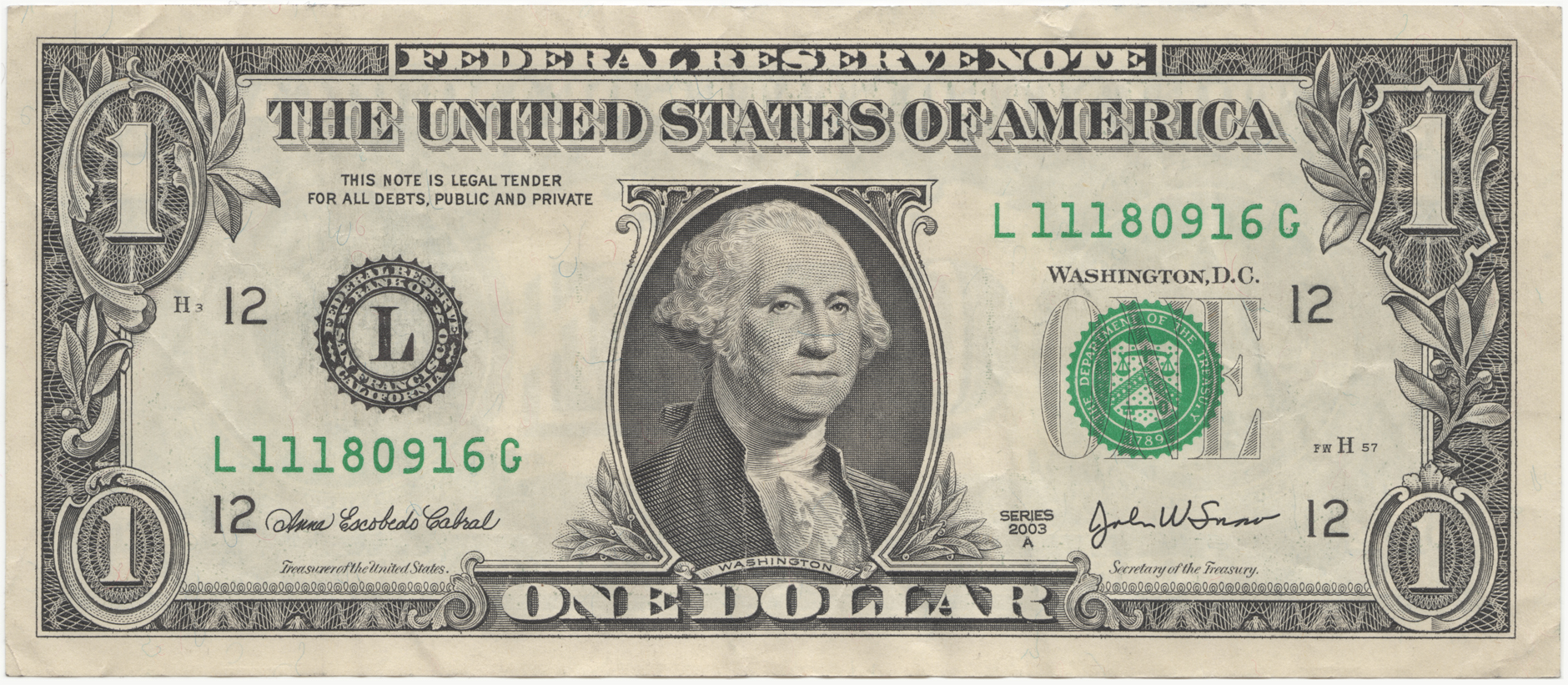
  • "When Perón took office, Argentina had the world’s second largest gold reserves. But these were soon squandered nationalizing industries and funding politicized investments, like the Huemal Project." (Kind of off-subject, here, but I think it's interesting: I just read that in 1940, when paper dollars were actually redeemable for silver (the face of a silver certificate said, "This certifies that there is on deposit in the Treasury of the United States of America one dollar in silver payable to the bearer on demand."), the United States government held 6 billion ounces of silver--to fulfill its promise. Today, with the "dollar" meaning, really, nothing more than a sheet of paper with printing on it that declares "This note is legal tender for all debts, public and private," the government holds no silver. None. Nada. . . . As for gold, it holds just over a quarter of a billion ounces. . . . A lot of people will say: "Who cares? No one--well, no one who counts--thinks money needs to be tied to precious metals. There are other ways to value currencies" . . . and they will mention land, labor, energy, and other things of value [how about, "a force-backed claim on . . . the productive power and wealth-producing capacity of the sovereign economy on the whole"--i.e., a government's ability to extract wealth from its subjects?] that might be pledged as the foundation for the currency's intrinsic worth. And maybe they are correct. Though it sure feels crazy that an entity like the Federal Reserve can create "money" out of nothing whenever the U.S. government asks. . . .

    But while we're on the subject, let me note that, while a quarter billion ounces of gold sounds like a lot, it's really not. At today's prices [just over $1,000 per ounce], that amounts to only slightly more than a quarter of a trillion dollars: "nothing more than pocket change on the Federal balance sheet," the equivalent of little more than "a rounding error . . . and irrelevant to overall governmental finances," according to Bill Zielinski.)
     
  • "As the US follows the same policy path as Argentina," Davidson suggests, "it will obtain similar results. Perverse policies will destroy prosperity and inspire thinking people to get out, and/or get their money out." ("This is already happening," says Davidson. "In 2008, more than two million Americans emigrated, marking the first time that net legal and illegal migration . . . reduced the population of the US.")
     
  • As more people seek escape, Davidson suggests, the federal government will do what Perón's government did: impose exchange controls. Moreover, "Soon after, the government will demand that people who had the foresight to take their money out bring it back."
     
  • "Although the U.S. government will resort to draconian measures to tax the 'rich,' . . . destructive economic policies will diminish tax revenues even as government spending runs amok."

    "Diminish tax revenue"? Davidson notes that,
    Among other consequences of runaway budget deficits and hyperinflation was the virtual disappearance of the income tax in Argentina. It shrank to just 1% of GDP as the value of the previous year’s income became pocket change by the time taxes were due.
     
  • Next consequence? Wage and price controls.
     
  • . . . And so on and so forth.
In sum: As the government's true bankruptcy becomes more and more obvious, the U.S. will not be a pleasant place in which to live. And, I might add, it will be especially unpleasant for those of us who grew up here because so few of us have ever lived with any real deprivation. We are not used to the kind of basic living arrangements that so many people around the world experience. We "expect" better. We "demand" better. The government--at least many of us seem to believe--"owes" us better. Y'know, it "owes" us things like free health care.
*******


For more on the subject of the economic future of the United States, I recommend the following articles I discovered in the midst of researching and writing the above:
  • What you must know about bankruptcy of the United States--an interesting and, I dare say, informative analogy between the federal government today and General Motors three years ago, before it went bust.
     
  • For a brief, crisp summary of Argentina's demise, see Stephen Cox's review of Rojas' The Sorrows of Carmencita: Once a Great Nation.
     
  • 20 Reasons Why The U.S. Economy Is Dying And Is Simply Not Going To Recover--a concise, and graphically-rich summary of significant economic data.
     
  • Another alarming article by James Dale Davidson, this one from February 2009, subtitled Why the U.S. Banking System is Toast. Davidson offers analogies to and perspectives from the bankruptcy of Iceland in October 2008 . . . and the trillion percent hyperinflation in Brazil during the '80s and '90s . . . to Japan's economic downfall in '89 (from which it has yet to recover) . . . to the Great Depression in the U.S. --To save a bit of time, begin reading from the paragraph that starts "A decade and a half ago there were few subprime mortgages."
I'll stop here. Sorry to have gone on so long.

[NOTE: If you are reading this article on Facebook and can't use links or don't see photos, please realize it originally appeared and is still available on my personal blog.]

Wednesday, December 03, 2008

Get rid of income taxes for a year!

Representative Louie Gohmert of Texas notes that the federal government has committed to spend--or has already spent--close to $7 Trillion in an attempt to jump-start the U.S. economy. It "only" takes in $1.2 Trillion (one number he mentioned) to $2 Trillion (the number his interviewer mentioned) in income taxes each year.

"Why not give the money to the people who can really use it?" he asks. "Let's get rid of the cronyism and the fat-cat paybacks. . . ."

I kind of like the idea!

Wednesday, September 24, 2008

Some suggested solutions to the Executive Branch's attempted power grab . . .

I'm "just" really impressed with how people outside of the government seem to have more common sense and insight than those on the inside.

Check out Dave Ramsey's proposal. Or, better yet, Carter Dougherty's history lesson about Sweden's similar problem in the early '90s.

And, in case you're not riled up enough, check out Jason Linkins' pointed commentary in The Huffington Post:
A critical - and radical - component of the bailout package proposed by the Bush administration has thus far failed to garner the serious attention of anyone in the press.

Section 8 . . . of this legislation is just a single sentence of thirty-two words, but it represents a significant consolidation of power and an abdication of oversight authority that's so flat-out astounding that it ought to set one's hair on fire. It reads, in its entirety:

Decisions by the Secretary pursuant to the authority of this Act are non-reviewable and committed to agency discretion, and may not be reviewed by any court of law or any administrative agency.

In short, the so-called "mother of all bailouts," which will transfer $700 billion taxpayer dollars to purchase the distressed assets of several failed financial institutions, will be conducted in a manner unchallengeable by courts and ungovernable by the People's duly sworn representatives. All decision-making power will be consolidated into the Executive Branch. . . . The measure will run up the budget deficit by a significant amount, with no guarantee of recouping the outlay, and no fundamental means of holding those who fail to do so accountable. . . .

Robert Kuttner cuts through much of the gloss in an article in [Mon]day's American Prospect:
. . . When the Reconstruction Finance Corporation of the 1930s pumped a total of $35 billion into U.S. corporations and financial institutions, there was close government supervision and quid pro quos at every step of the way. Much of the time, the RFC became a preferred shareholder, and often appointed board members.

The Home Owners Loan Corporation, which eventually refinanced one in five mortgage loans, did not operate to bail out banks but to save homeowners.

And the Resolution Trust Corporation of the 1980s, created to mop up the damage of the first speculative mortgage meltdown, the S&L collapse, did not pump in money to rescue bad investments; it sorted out good assets from bad after the fact, and made sure to purge bad executives as well as bad loans. And all three of these historic cases of public recapitalization were done without suspending judicial review. [Emphasis added. --JAH]
. . . But one cannot overstate this: Section 8 is a singularly transformative sentence of economic policy. It transfers a significant amount of power to the Executive Branch, while walling off any avenue for oversight, and offering no guarantees in return. . . .

[T]he fact that Section 8 of the Paulson plan seems to strike few as a de facto dealbreaker can and should astound. The failure of Congress to hold the line on this point would be truly embarrassing. But if we make it through this week with nobody in the press specifically informing the public about the implications of this single sentence - in the middle of a complicated bill, in the middle of a complicated time - then right there, you have the single largest media failure of this year.
Amen.

. . . Oh. While we're at it.

Notice that, in his speech tonight, Bush didn't say a word about the Section 8 power grab--not even a hint of contrition for the bald-faced attempt to place us all under a dictatorship.